Our Water Conservation program to create awareness, innovate, design, implement projects on ground and impact government policy for 5 R’s of Water Conservation by working with communities for water security
To create awareness, innovate, design, implement projects & impact government policy for Dignified life, Easy and Sustainable access to Safe Water, Sanitation and Hygiene for the urban poor and rural India. Also work for Solid Waste Management.
To highlight, empower, connect and reward Water Wise citizens who work and implement water conservation initiatives in communities to help make them water secure
To Educate, Innovate, Inspire and Enable a sustainable, water abundant world by a shift towards profitable, health-giving, water & resource efficient agriculture for food and water secure nation
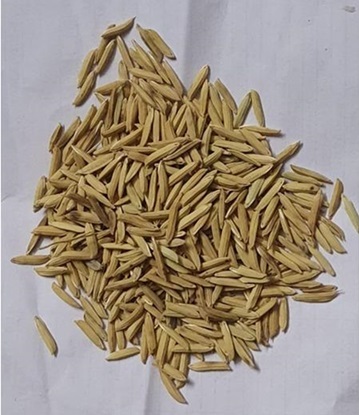
Water scarcity has become a growing concern in several villages of Hathras district. Excessive irrigation in paddy cultivation often leads to water wastage and reduced groundwater levels. To address this issue, farmer Sunil Chauhan from Chintagarhi village adopted the Anaerobic Sowing of Rice (ASR) method for paddy cultivation under the ‘Naturalization of Agriculture’ initiative promoted by FORCE. The idea is to bring water saving techniques into the farming and advocate for practicable system where the chemical burden on crops is gradually replaced with bio-inputs such as vermi compost, growth inputs prepared by dung/ urine other bio inputs and application of bio-pesticides.
In Hathras, PJRM FORCE is working on promoting naturalization of agriculture since about two years and till date over 400 farmers have adopted this technique and reaped handsome benefits. However, one of the most amazing things happened in the couple of years is growing of paddy with negligible irrigation using ASR technique where the bed is prepared to create anaerobic condition with light miniaturization and then direct seeding is done. The irrigation of required is give at 21 days interval that saves approximately 90% water.
2. About ASR
This is a pioneering, innovative technique developed by Sh. Avtar Singh Phagwara (MSc Chemistry and Innovative Farmer). He has developed and practiced this for more than decades now. This 90% water saving method of paddy cultivation, is built around a peculiarity in the agronomy of rice viz it needs anaerobic conditions in its root zone during the germination and immediate post germination stage. With this understanding, Sh Avtar singh developed a method where soil compacting, and not waterlogging, becomes the mode for driving out air from the soil in the rice root zone. The soil is compressing using a planker 6-7 times so that no soil air is left. Then direct sowing of rice seed is done.
This saves the farmers time, labor and money as no nursery is prepared. After 21 days, just enough irrigation is done to maintain soil moisture. And if there is intermittent rain, no irrigation is required.
The success of Avtar Singh Ji’s ASR method shows that paddy is not a water guzzling crop
3. The ASR Method
Planking 6 times before sowing for creating anaerobic conditions
Compress after sowing – 1-2 planking
Irrigation only after 21 days – no flooding only to maintain soil moisture
Use non-chemical inputs – Beejamrit, jeevamrit etc.
Use chemical only in case of emergency and not beyond recommended quantities.
After harvest let the stalks dry on field which become fertilizer in some days
4. Results and Achievements
After adopting the ASR method, Sunil Chauhan observed remarkable results in his paddy field. The rice grown as ASR has excellent quality and requires literally no pesticides / chemical fertilizer. We lab tested the ASR produce of multiple fields in 2024 and 2025 on 104 parameters. The results show this that ASR rice is excellent, with no chemical residues and is of export quality with no decline in production per acre. [16-18 Qt per acre of Basmati]
5. Experience and Farmer Quotes:-
The experience of Sunil Chauhan from Chintagarhi, Hathras, clearly demonstrates that water-efficient techniques like the ASR method can save up to 90% of irrigation water without reducing yield. His success story highlights the potential of integrating traditional knowledge with scientific water management practices for sustainable agriculture in water-stressed regions.
“By following the ASR method suggested by FORCE, I have practiced zero chemical farming using my own Jiivaamrit [made out of cow dung , urine and maizeflour + jaggery]. This not only improved my yield but also saved water. I am proud to see how natural methods can bring such positive results.”
Motiram is the Pradhan [Elected Village Head] of a small village Chintagarhi under the Chandgarhi Panchayat of Hathras Block. The village has only 119 households mostly resided by the socio-economically backward scheduled cast. The village mostly dependent upon farming activities and allied farming activities such as labour. A few of them also earn their livelihood through selling vegetables and working in the rice mill that is situated in the village.
Motiram, 56, is however the soil of soil wanting to do something extra for the village and the community members. Only in April 2021 he got elected overwhelmingly with the support of the community members with a promise to improve the situation of the village. It however never came into his mind that one way of serving the people would come in the form of water harvesting and it would be brought by an external agency.
In early 2024 while FORCE was developing intervention plant for Hathras block for its Watershed Health Initiative project funded by PepsiCo India, we came across this village and Motiram who readily agreed to transform his village to z zero water outflow village by restoring the wastewater pond [that never was] and allowing FORCE to create as many rainwater harvesting structures in the village as needed.
He also passionately supported us in building a learning centre in Chintagarhi.
We chose Chintagari for its ideal size – small enough for ease of implementation, yet big enough to offer replicability learnings and for the sheer enthusiastic Motiram to do something for his people.
The Constructed Wet Land
Chintagarhi, a year back had an area that was demarked by the panchayat as a collection point for the wastewater from the village. However, over the years this place became a marshy place that has reduced the wastewater flow to a small drain that through a channel went to the nearby farm- untreated while the exit point – approx. 3000 sq.m. of silted up, marshy land near the main road – at one end of the village. Also over the time it was a dumping point for garbage for the community and was a source for filth and water borne disease. Part of that land was also used as a livestock waste dumping site. The possibility of being able to use this land to develop a new pond was a key factor influencing our decision to make Chinta Garhi a model GPGM village.
After we approached Motiram, he saw an opportunity to create a constructed wetland and pond which can serve the dual purpose of cleaning wastewater and storing treated wastewater along with rainwater runoff which could be used by farmers for irrigation.
We initiated the earthwork and dug 3 meters deep at the centre with proper bunds on the sides. When the pond was ready with the proper channelization of wastewater, the baffle chambers were created for de-silting and de-greasing. Thereafter a reed-bed of three meter deep, two meter wide and ten meters long that bears over 100 plants that bio digest the wastewater.
The village pond with capacity of 5058.6 cu.m. made that gets treated wastewater through the reed bed. The boundaries of the wetland now bears plants that doubly treat the wastewater and also has a barbed wire fencing to protect any trespass by the villagers or their cattle.
The Four RWH Structures
Apart from the wetland we have FORCE also constructed 2 new rainwater harvesting structures having a capacity of 1067 cu.m. 2 Defunct water structures restored with 765.16 KL capacity. One of the RWH has been created in the upper primary school located in the village itself. It is now a centre for attraction and learning space for the children.
The school by itself has developed a garden were water efficient farming on a small scale is done through broad bed system. The school also bears creative all across the walls – on RWH, climate smart agriculture, WASH learnings etc.
With the pond approximately filled four times a year the total water harvested annually stands to be 1.69 crore liters per year [16.9 million liters]. The total Capacity thus created is 1.88 crore liters of water.
Learning Centre
Another site has been developed especially for children as a ‘learning through play’ kind of learning center. An RWH puzzle and a snake & ladder game encourages children to learn about water conservation, rainwater harvesting and how they can reduce their water footprint.
The impact is – the village now has got a new look with migratory birds visiting the pond. The number of fishes that were release there on the World Fisheries Day in November 2024, have grown. It has become a landmark in the district as Chintagarhi is the first Zero Water Outflow Village. People often visit this village and meet Motiram for advice.
So much so that the government officials regularly visit this place and inviting FORCE to develop other such places in the district and are now ready to handover the charge of Jal Shakti Kendra mandated by the Jal Shakti Ministry of Government of India.
Motiram is a people’s hero now. FORCE and PepsiCo India thank him for all his support to maje Chintagarhi a Model Water Village
Reduce Wastage of Water – the 1st R of Water Conservation
Every day we read about the shortage of water in India and many other countries. Niti Aayog in one of its reports has suggested that as many as 21 cities will run out of ground water as early as 2020. Such a scenario always brings up a question – is there really a shortage of water? And the simple answer is NO. There is no shortage of water. Nature gives us more water than our needs. Yes, nature is unable to give us more eater than our greed.
Quantity of freshwater is fixed – It reaches us after going through 2 cycles – Nature’s Water cycle and Manmade Water Cycle. One of the simplest ways to overcome the perceived shortage of water is to simply prevent wastage of water. It can save a lot of misery, effort and money. And numbers are huge.
How to Reduce Wastage of Water
To save water, we follow 5 R’s of Water Conservation. The 1st R of Water Conservation is – Reduce Wastage of Water.
This article is about how to reduce wastage of water. It is not yet a definitive guide on reduction of wastage of water. But it aims to be with the help of knowledgeable readers such as yourself. We have listed below ways in which we can achieve our objective of water conservation by reducing water wastage. I am sure that we have missed out a few wonderful ideas. It is my request that you share your ideas about how to reduce wastage of water in the comments section below or use the contact us page to share the ideas. We ill incorporate them in the article with due credit to you.
1. Save one bucket of water each day by reducing the consumption. In a city like Delhi which has a population of 18.5 million, if every person saves 1 bucket a day (15 liters of water), then 27.75 crore liters / day or 10128.75 crore liters / year are saved. This is equal to 42 days requirement of all families in Delhi. (Assumption each family has 5 members who require 130 liters of water every day). This is true for all cities irrespective of the population of the city. If each person saves one bucket of water every day, the total water saved will help sustain all families in the city for 42 days. The question that can be asked now is how you save at least one bucket water every day. Here are some ways to do it:
Use aerators in all taps.
Use dual flush system in the toilets
Use a water mug while brushing your teeth instead of using running tap water in the sink.
Similarly use a water mug or tumbler while shaving and not let the tap water flow as you shave.
It is advisable to turn of the tap while scrubbing / soaping hands. Turn on the tap only to wet the hand and later to rinse the soap off.
Use bucket or a can to water plants instead of a hose pipe.
Mop the floors to clean them instead of using a hose pipe with running water.
Use water in bucket to clean your vehicles instead of hose pipe with running water.
Take bath with water filled in a bucket instead of using a shower. However, if you do not spend too long in the shower (under 5 minutes) then shower bath may be used.
Use a bucket or large container to rinse the utensils instead of using the running tap water.
Use water efficient washing machines that consume lesser water per wash
Use float valves and water level indicators in storage tanks so that there is no water overflow.
Serve half glass of water to your guests. If they need more water, the’ll ask for it.
2. Reduce water wastage by ensuring that there are no leaking taps. If a tap leaks @ 1 drop / second, we lose 2000 litres/month. If there are two such taps in each house, Delhi loses 49.33 Cr litres / day or 18007 Cr litres / year which is equal to 74 days water requirement of all families of Delhi.
3. RO filters are a big source of water wastage. In areas where the water is supplied by the municipal corporations, a RO is not really required since the TDS level of the water is quite low. In such cases other form of water purifiers such as UV or gravity filters may be quite enough. However, if you must use RO water purifiers, then the reject water from the RO should be used again. There are many ways in which the RO reject water can be used to reduce the water wastage after the TDS level of the reject water is tested (Water with TDS below 2000 can be used for many purposes)
Cleaning the floor
Watering the plants
Washing vehicles
Washing the utensils
Flushing
As I have mentioned earlier, there must be many other ways in which water wastage can be reduced. Please share your ideas in the comments section below or write to us through the contact us page.
As I saw more and more of Water in my work for its conservation, I started to see that Water is not a mere ‘resource’. All that you need to learn about living a life well lived, you can learn from Water. I see, Water as my Guru. Please read this excerpt from the first draft of a book I’m writing on it. Please share with me stories, ideas, existential questions….anything…. that you think must be a part of a book like this. Also please help me find a title for the book !
The Guru Revealed Himself to me…..
….In Varanasi. Varanasi is a holy city on the banks of the holy river Ganges. The epicentre of the Hindu religion, the city has temples all around and thousands of people immersing themselves in the Ganga’s holy waters.
“This is all about religion, not spirituality“, I thought.
Though there were temples all over, I did not particularly feel closer to God there. The holy river also looked too crowded, too dirty. I was disappointed.
“You cannot see Her now. Come tomorrow morning before dawn to see the Mother” I heard someone say behind me. I turned to see a sadhu standing there smiling at me. Before I could think of something to say, he walked away.
So that’s how it came about that I reached the Ganga Ghat early next morning. It was 5.30 a.m. and the ghat was quiet. The sun was not yet up. The river, in the twilight, looked calm and inviting. I felt an intense desire to go deep into it. I looked around and found a boatman to take me for a boatride in the river……
…And, that boatride transformed my life. As the boatman rowed upto the centre of the river, I felt myself getting enveloped in peace. From being the centre of my own universe I felt myself becoming part of an eternal constant flow. The quiet splashing of the oars and the gurglng of the river became a divine music that took me far beyond myself.
I felt the river talk to me. She was part of me.
I looked back towards the ghat. For the first time,I saw it with the eyes of the River. From birth to death, the entire play of human life was being played out there. There was a new born child being baptised, young children frolicking in the shallow Water. The local stall owners were having their daily bath and others were setting up stalls. I saw an old sadhu sat in yogic meditation oblivious to a woman washing her long tresses right next to him. A family offering the ashes of their loved one to the River while the dobhi ghat nearby was slowly filling up with washermen with their load of washing for the day. An old woman begging, a young running into hordes of pigeons to make them fly. And next to all these vignettes of life – a cremation ghat with a pyre still burning. Stacks of wood piled up waiting for their turn to give salvation. The boatman told me that this cremation ghat was part of ancient history – a folktale about Raja Harishchandra.
From birth to death in one blink of the eye. Not in sequence but all happening at the same time. Different faces in different stages – but on the same journey. And watching it all, a quiet, flowing river.
The wisdom of the ages, the combined life experience of all those who throng the ghats, the birth rites for infinite lives and deliverance for souls of infinite dead….all in that patient, eternal River.
At this very instant, The Sun burst through the horizon in all its radiant glory, as if to bless me in my moment of truth. I sat back to enjoy the naughty flirtation of the oar with the blushing river and the caressing rays. The river became a sprightly, happy, vain young girl playing one suitor against the other. I felt complete – a part of this happy complete picture.
But not for long…… I saw a sewage pipe emptying its black filth into the river. The foam from the washermen’s soaps soon stood on the water like hillocks of cotton. Garbage floated in the river as the flower sellers threw yesterday’s leftovers into the river. Disturbed by these sights, I felt the magic fading.
Suddenly, the boatman stopped rowing. Startled out of my reverie, I saw him then pick up a bamboo from the base of the boat and throw it into the river.
Almost upturning the boat as I lunged to stop the bamboo from falling into the water, I shouted at the boatman “Why did you do this? Isnt there enough muck in the river already?”
The boatman looked surprised” Muck? Where? And the bamboo is to help the birds eat” Sure enough, a pigeon flew down and perched himself on the floating bamboo. From this secure perch, he pecked at the invisible floating stuff. ” The birds drown trying to eat from the Water. All of us put these sticks to help Ganga Maiyya feed them.”
‘Ganga Maiyya’ – Mother of a species that lives so comfortably with its contradictions! Men who think nothing of poisoning a River go all out to save a pesky pigeon from drowning!
“I’ve spent the past hour listening to you talk about Ganga Maiyya . If you revere Her so much, why do you people pollute Her ?”I asked the boatman.
The boatman looked at me increulously and replied “Kaisi baat kar rahin hain aap ! How can we pollute Her? She is purity itself! Her divine purity cleanses our souls – how can she be impure?”
Silence – of frustration on my side and complete conviction on his.
The boatman still looked troubled. He asked ” Have you been to ‘Gaumukh’? “
“No”, I replied.
He nodded knowingly and continued, ” That’s why you don’t understand! Gaumukh is where the Holy Ganga starts her earthly journey. Through millions of cycles of birth and death, Ganga maiyyaa is reborn every year, as pure as always, from the always pristine Gangotri. You know why that is?”
“Of course….glaciers are…?”I tried to explain about glaciers as origins of perennial rivers……
The boatman ignored this interruption, “Pollution, of the mind or body, happens when dirt clings to you. Ganga Maiyyaa, takes her Godly form to discard our black sins before her rebirth at Gangotri. She carries the divine knowledge of healing in herself. Even as she flows, she decimates all that is impure.”
He then rummaged around in a cloth bag he had. He fished out an empty plastic bottle, handed it to me and ordered “Fill it with Ganga Jal.”
I look around and gingerly filled the bottle.
Mollified, he smiled and said, “Keep it. You’ll need it for pujas. And see the proof of her purity – the Water will not go bad, however many years you keep it.”
I still have that bottle. It’s been more than 5 years – the Water looks and smells the same.
Science or faith? Does it really matter? What matters is the wisdom of the River which knows what to keep and how.
When we reached the river bank, I got off the boat, thanked the boatman….and then, just sat at the river bank for a long time. I know, the River knew my tumultous thoughts. She kept caressing my feet, spraying mist over my head and making cooing sounds to soothe my soul. Entranced, I watched Her as she weaved her way gracefully but with determination through obstructions. I traced her cyclical journey from Gaumukh to the sea in my mind.
That day, I understood why the River allows the sacrilege we commit. We invade her space, change her form and sully her, all, in the name of religion or, worse, out of sheer apathy. But, She flows on, unpertubed, because Her wisdom gives Her empathy. She knows, that our desire for control, comes from our frightening knowledge of our mortality. So, She offers comfort in whicheverway we seek.
The River denies us nothing because….She is secure in Her immortality.
Is God not immortal? Unconditonal love, acceptance and support – forever and ever – Is this not what we ask of our Gods?
The simple boatman, had shown me what I had not seen in all my years of working with Water. He showed me Divinity in Water….
…and if 75% of our body is Water…..then….he showed me….Divinity in Me.
Make God your Guru
Let Him tell you what to do
Listen he’s calling, calling you
Take time to listen
Take courage to obey
The inner voice is calling, calling you
There are voices all around me
My enemies and my friends
Do this, dont do that
The chorus never ends
But i shall always listen to that quiet inner voice
It is swift and definite
And I have made my choice
Make Water your Guru….
My God, My Guru had revealed Himself to me- Water.
 Water Security Program