ASR Paddy Cultivation @10% Irrigation

    ASR Paddy Cultivation @10% Irrigation

    The future of Paddy Cultivation is here…

    1.      Background

    Water scarcity has become a growing concern in several villages of Hathras district. Excessive irrigation in paddy cultivation often leads to water wastage and reduced groundwater levels. To address this issue, farmer Sunil Chauhan from Chintagarhi village adopted the Anaerobic Sowing of Rice (ASR) method for paddy cultivation under the ‘Naturalization of Agriculture’ initiative promoted by FORCE. The idea is to bring water saving techniques into the farming and advocate for practicable system where the chemical burden on crops is gradually replaced with bio-inputs such as vermi compost, growth inputs prepared by dung/ urine other bio inputs and application of bio-pesticides.

    In Hathras, PJRM FORCE is working on promoting naturalization of agriculture since about two years and till date over 400 farmers have adopted this technique and reaped handsome benefits. However, one of the most amazing things happened in the couple of years is growing of paddy with negligible irrigation using ASR technique where the bed is prepared to create anaerobic condition  with light miniaturization and then direct seeding is done. The irrigation of required is give at 21 days interval that saves approximately 90% water.

    2.      About ASR

    This is a pioneering, innovative technique developed by Sh. Avtar Singh Phagwara (MSc Chemistry and Innovative Farmer). He has developed and practiced this for more than decades now. This 90% water saving method of paddy cultivation, is built around a peculiarity in the agronomy of rice viz it needs anaerobic conditions in its root zone during the germination and immediate post germination stage. With this understanding, Sh Avtar singh developed a method where soil compacting, and not waterlogging, becomes the mode for driving out air from the soil in the rice root zone. The soil is compressing using a planker 6-7 times so that no soil air is left. Then direct sowing of rice seed is done.

    This saves the farmers time, labor and money as no nursery is prepared. After 21 days, just enough irrigation is done to maintain soil moisture. And if there is intermittent rain, no irrigation is required.

    The success of Avtar Singh Ji’s ASR method shows that paddy is not a water guzzling crop

    3. The ASR Method

    • Planking 6 times before sowing for creating anaerobic conditions
    • Compress after sowing – 1-2 planking
    • Irrigation only after 21 days – no flooding only to maintain soil moisture
    • Use non-chemical inputs – Beejamrit, jeevamrit etc.
    • Use chemical only in case of emergency and not beyond recommended quantities.
    • After harvest let the stalks dry on field which become fertilizer in some days

    4. Results and Achievements

    After adopting the ASR method, Sunil Chauhan observed remarkable results in his paddy field. The rice grown as ASR has excellent quality and requires literally no pesticides / chemical fertilizer. We lab tested the ASR produce of multiple fields in 2024 and 2025 on 104 parameters. The results show this that ASR rice is excellent, with no chemical residues and is of export quality with no decline in production per acre. [16-18 Qt per acre of Basmati]

    5. Experience and Farmer Quotes:-

    The experience of Sunil Chauhan from Chintagarhi, Hathras, clearly demonstrates that water-efficient techniques like the ASR method can save up to 90% of irrigation water without reducing yield. His success story highlights the potential of integrating traditional knowledge with scientific water management practices for sustainable agriculture in water-stressed regions.

    “By following the ASR method suggested by FORCE, I have practiced zero chemical farming using my own Jiivaamrit [made out of cow dung , urine and maizeflour + jaggery]. This not only improved my yield but also saved water. I am proud to see how natural methods can bring such positive results.”

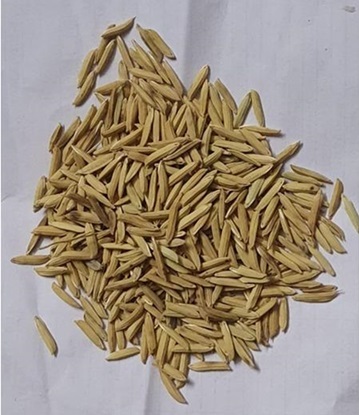
    The ASR Paddy from Chauhan’s Farm
    Armed With Passion, Chintagarhi Pradhan Motiram Converted His Village into a Zero Water Outflow Village

    Armed With Passion, Chintagarhi Pradhan Motiram Converted His Village into a Zero Water Outflow Village

    गांव का पानी गाओं में

    Motiram is the Pradhan [Elected Village Head] of a small village Chintagarhi under the Chandgarhi Panchayat of Hathras Block. The village has only 119 households mostly resided by the socio-economically backward scheduled cast. The village mostly dependent upon farming activities and allied farming activities such as labour. A few of them also earn their livelihood through selling vegetables and working in the rice mill that is situated in the village.

    Motiram, 56, is however the soil of soil wanting to do something extra for the village and the community members. Only in April 2021 he got elected overwhelmingly with the support of the community members with a promise to improve the situation of the village. It however never came into his mind that one way of serving the people would come in the form of water harvesting and it would be brought by an external agency.

    In early 2024 while FORCE was developing intervention plant for Hathras block for its Watershed Health Initiative project funded by PepsiCo India, we came across this village and Motiram who readily agreed to transform his village to z zero water outflow village by restoring the wastewater pond [that never was] and allowing FORCE to create as many rainwater harvesting structures in the village as needed.

    He also passionately supported us in building a learning centre in Chintagarhi.

    We chose Chintagari for its ideal size – small enough for ease of implementation, yet big enough to offer replicability learnings and for the sheer enthusiastic Motiram to do something for his people.

    The Constructed Wet Land

    Chintagarhi, a year back had an area that was demarked by the panchayat as a collection point for the wastewater from the village. However, over the years this place became a marshy place that has reduced the wastewater flow to a small drain that through a channel went to the nearby farm- untreated while the exit point – approx. 3000 sq.m. of silted up, marshy land near the main road – at one end of the village. Also over the time it was a dumping point for garbage for the community and was a source for filth and water borne disease. Part of that land was also used as a livestock waste dumping site. The possibility of being able to use this land to develop a new pond was a key factor influencing our decision to make Chinta Garhi a model GPGM village.

    After we approached Motiram, he saw an opportunity to create a constructed wetland and pond which can serve the dual purpose of cleaning wastewater and storing treated wastewater along with rainwater runoff which could be used by farmers for irrigation.

    We initiated the earthwork and dug 3 meters deep at the centre with proper bunds on the sides. When the pond was ready with the proper channelization of wastewater, the baffle chambers were created for de-silting and de-greasing. Thereafter a reed-bed of three meter deep, two meter wide and ten meters long that bears over 100 plants that bio digest the wastewater.

    The village pond with capacity of 5058.6 cu.m. made that gets treated wastewater through the reed bed. The boundaries of the wetland now bears plants that doubly treat the wastewater and also has a barbed wire fencing to protect any trespass by the villagers or their cattle.

    The Four RWH Structures

    Apart from the wetland we have FORCE also constructed 2 new rainwater harvesting structures having a capacity of 1067 cu.m. 2 Defunct water structures restored with 765.16 KL capacity. One of the RWH has been created in the upper primary school located in the village itself. It is now a centre for attraction and learning space for the children.

    The school by itself has developed a garden were water efficient farming on a small scale is done through broad bed system. The school also bears creative all across the walls – on RWH, climate smart agriculture, WASH learnings etc.

    With the pond approximately filled four times a year the total water harvested annually stands to be 1.69 crore liters per year [16.9 million liters]. The total Capacity thus created is 1.88 crore liters of water.

    Learning Centre

    Another site has been developed especially for children as a ‘learning through play’ kind of learning center.  An RWH puzzle and a snake & ladder game encourages children to learn about water conservation, rainwater harvesting and how they can reduce their water footprint.

    The impact is – the village now has got a new look with migratory birds visiting the pond.  The number of fishes that were release there on the World Fisheries Day in November 2024, have grown. It has become a landmark in the district as Chintagarhi is the first Zero Water Outflow Village. People often visit this village and meet Motiram for advice.

    So much so that the government officials regularly visit this place and inviting FORCE to develop other such places in the district and are now ready to handover the charge of Jal Shakti Kendra mandated by the Jal Shakti Ministry of Government of India.

    Motiram is a people’s hero now. FORCE and PepsiCo India thank him for all his support to maje Chintagarhi a Model Water Village

    Ward Jal Rakshak (JR) Club – “Water for Peace”

    Ward Jal Rakshak (JR) Club – “Water for Peace”

    Water scarcity is increasingly becoming a cause of inter user, interstate and International conflict. This is because water scarcity kills people – their health, prosperity, livelihoods and lifestyles.

    Water scarcity may well be the biggest threat to Global Peace (link of blog).

    Therefore, on the auspicious occasion of World Peace Day 2020, we invite you to join our special scheme ‘Jal Rakshak Clubs – Water foe Peace’.

    In this scheme we invite Jal Rakshaks to form a ‘Jal Rakshak Club’ of 10 Jal Rakshaks or more from within their municipal ward. The Club will be the means to promote water security practices and also the life-learning’s of a peaceful,  productive, satisfied self and society from Water as a Guru.

    Read details of JR club structure, values and activities here (add link).

    For the first five clubs, we will support meeting costs of upto Rs 1000 per meeting for 3 monthly meetings. Also, for all clubs we will offer the chance to get up to Rs 3000/- for activities on the theme ‘Water for Peace’.  Your club will also be given Water Carats or Credits as per the norms. A special prize of Rs 3000/- will also be given to the most impactful activity.

    Hurry up! Make your “Ward Jal Rakshak Club” today!

    Terms & Conditions for participation

    1. Any Jal Rakshak can participate.
    2. Jal Rakshak Club can have 10 or more Jal Rakshaks. From your municipal wards.
    3. JR Club will be formed and shall operate as per the norms in the JR&WG manual’. Please refer to it for details on how to conduct Club meetings.
    4. Scheme’ includes monthly meetings and at least one activity (which may include number of people reached or amount of water saved).
    5. Registration of Ward JR club to be done by 15th October, 2020.
    6. Activities to be completed by 30th October 2020.
    7. Meeting grant will be given on first come first serve basis. The first 5 clubs that register before 30th September, 2020.
    8. Each and every member of the Jal Rakshak club should be registered on JR&WG App.
    9. All the clubs have to provide written commitment that these clubs will be functional even after the completion of this scheme.
      • We are happy to discuss more detail about this scheme with you; we are always available between 4 PM to 5 PM on every Tuesday and Friday to discuss any further details.
      • It is mandatory to maintain document of verification for your conducted activities or meetings, which includes Bills, photographs of the event etc.
      • Selection of activities and winners to support is at the sole discretion of FORCE.
      • After the verification of work, the grant amount will be dispersed to the winning JR Clubs.
      • For any query and suggestion feel free to contact us at +91 87450 17933 or write us at wgi@forcetrust.org
      • WG App link: https://play.google.com/store/apps/details?id=com.digitalindiavibes.wg


    Participate in Plantation Drive and Win Rs. 5000!

    Participate in Plantation Drive and Win Rs. 5000!

    Dear Jal Rakshaks

    Many thanks for your kind interest in becoming an environment saviour. As we all know the groundwater crisis is becoming worse every day. We blame everyone else but ourselves for the same. The time has come for each of us to take the initiative and start work to arrest the fall in groundwater levels across the country.

    This monsoon month, let us plant indigenous trees in our localities which would help clean the air, bring rain, and eventually recharge the groundwater. Under this “plantation drive” offered by FORCE, you not only make your areas green by planting trees but also get recognised with some rewards!

    Under this offer we invite Jal Rakshak & Water Guardian Clubs (JR&WG Clubs), RWAs and individuals to plant 50 or more trees in their localities. For this greening, we will award 20 water carats (1 Water carat is equivalent to 10,000 Litres of water saved, which is equivalent to 3 mature tree) as well as a prize money of Rs 5000 to the first 10 participants.

    Hurry up! As Water saviours, let us lock each drop of rainwater in the root of native tree species and improve the ground water quality and Water table.

    Terms & Condition for participating in the “FORCE Jal Rakshak Plantation Drive”

    • This plantation drive is open till 20th September 2020.
    • Any JR&WG Clubs RWA or Individual can enrol themselves in this drive.
    • The basic task to win this offer is to plant 50 or more trees in your respective localities or space available nearby and register as Jal Rakshak on the JR&WG App (link given below).
    • Plants must be native or indigenous species.
    • Plantation work must be uploaded on JR&WG App on or before 20th September 2020.
    • If the document with respect to plantation drive is received after 20th Sep 2020 then the Club/RWA/Individual is eligible for earning water carat depending on the number of trees planted and hence water saved, but not the prize.
    • The accepted uploaded documents would be either photographs with timestamp and geo location or Video of the plantation work.
    • Verification of validity of the uploaded document with regard to the plantation drive will be performed by FORCE Team and if any error in the uploaded document is found then the club / RWA / Individual will be notified for the same.
    • After the verification of work, FORCE team will select the first ten clubs/ RWA/ Individual (can be anyone), and the name of the winning club / RWA / Individual will be displayed on FORCE website.
    • First ten verified documents uploaded by clubs/ RWA/ Individual will get the offered prize and all verification and selection process will be under the supervision of FORCE team.
    • The winning prize for this plantation drive is Rs. 5000 per club or RWA or an Individual, and it is on first come and first serve basis so hurry up!
    • For any individuals, if he/she is also participating in any club or RWA the count of the trees must be different. (For example: if he/she has individually planted 40 trees and also participated in a club named “XYZ” which has planted 10 trees, if both have participated for the plantation drive, it will be discarded and the respective water carat will be credited in their account.)
    • For any clubs, RWAs and Individuals who want to participate in this drive must register themselves as Jal Rakshak on WG App.
    • For any query and suggestion feel free to contact us at +91 87450 17933 or write us at wgi@forcetrust.org
    • WG App link: https://play.google.com/store/apps/details?id=com.digitalindiavibes.wg

    Pro Or Against Water

    WaterDear Jal Rakshaks 

    In a recent Workshop, a comment by one of my friends in the developmental sector said something that got me thinking.  We were talking about a civil society advocacy group for Water. She asked me whether I wanted to be part of that group. I immediately said “Yes – any group that cares for Water is a group I’d like to be part of.” Then I asked her who the other members were. She reeled off some names. I was familiar with them and so, without thinking, I said, “ Oh- the Anti-Privatization group?’ She looked at me speculatively and replied, “ Yes…though we too are part of it.” Then more suspiciously, she asked ” Are you pro-privatization or Against?”

    I was stumped for a moment and then said the only thing that came to my mind  “ I am pro – Water for All”

    I remembered another time, another place when a government official had made a similar statement – equally suspiciously – “ Outsourcing is not the same as privatization –I hope you can appreciate the difference?”

    As I sat back today and thought about these questions and my answer, I wrote this blog randomly – just penned down my thoughts as they came….

    My relationship with Water

    I am neither an activist, nor an expert on Water, I am a student – a ‘shishyaa’ – of Water. As I go through the rituals of the work that I do for Water issues, one part of me watches and analyses Water in the different situations It finds itself in. Each time I marvel at the amazing resilience of Water… the calm grace with which it allows adverse situations to play themselves out.  One of the things that I have learnt from It is to assimilate every thought that comes my way. Water treats nothing as good or bad. It is as receptive to poison as it is to nectar. It labels neither. It leaves the labeling to the user. For example, a colony of bacteria in a sewage filled pond probably labels the Water as ‘Excellent –A + category Health drink” while we will label it ‘Highly polluted – E category – unfit for use”

    And that brings me back to my friend’s question and my answer. I think, the answer to whether private involvement in Water is good or bad will vary, depending on who is answering it.  And also will be determined by the circumstances in which private involvement is brought in.

    Where the government system works efficiently, with decision making based on rational parameters, compliance is ensured and where sustainability of the water system is planned for, there, perhaps, private support is not needed. In such a place, the internal dynamism of the government supplier will ensure that Water for All becomes a reality.

    But what of where the government’s water decision making gets influenced by irrational pressures? Or when it is not able to invest in infrastructural improvements needed to make the system work as required.  When the price paid for its inefficiency, is unsustainable pressure on the source and non availability of water for people?  Perhaps this is where the choices open up and so, the debate starts.

    If you ask those who are deprived of Water, they say that the first and most important need is to make water available for all. The choice of mode of delivery and its management system must be decided based on what serves this need best.  In many villages, NGOs supply safe drinking water to people. The polluted village lake has been given as their source of raw water, they have been given some financial support for the capital investment. The operational costs of the system are recovered through a price they charge for the treated water. The pricing is very reasonable, the water quality is good and a local person gets a livelihood running the system. But, in a way, this is a form of privatization – infact the worst kind where the source itself has been given away – so is this good or bad?  

    Those who argue for private involvement in Water management come armed with a huge bunch of facts and figures to prove its impact on efficiency. Those who argue against it come equally armed with examples of failed experiments and figures to prove that we are playing into the hands of profit making entities. Each is passionate and absolute in his belief.

    What irony …formless Water –  the universal solvent, reflecting all that is around it – …. Loved passionately by lovers –  rigid, exclusive and with doors firmly shut on each other.

    The truth is, there are no sides – we are all on the side of Water. Water must be allowed to do what it is best at – slaking the thirst of any living being that needs it. It must not be held hostage by any entity or ideology. With open minds and pure intent we must together identify the method or combination of methods that ensures this.  

    So, Jal Rakshaks, whatever be your belief on how best to care for Water, count me in as a fellow care-giver. In the world of Water, every belief has its space.

    Water Poem for Children

    Stones-in-waterHi I am Varun

    ‘Mr Water’ if you please,

    I’m here to make new friends

    With you and all your buddies.

    I’m a quiet kinda guy

    So I don’t like to brag;

    But fact is I’m a superhero

    Better than your comic book gags!

    Whoosh ! I can disappear

    And envelop you in ghostly mist;

    Thunk! I can sink the titanic

    With my solid icy fist!

    I am a fun filled fella

    Come with me for a spin;

    Sailing and swimming and flying and skiing’

    You name the game and I’m in.

    Par Bachchoo apun se panga mat lena!

    Mai garam ho gayaa to tera ubla anda banaa doonga

    Yaa thand maar ke aadmi ka putlaa banaa doonga

    Arre! Apun woh danger cheez hai jiski phook hee railgaadi bhagaa de !

    At the risk of sounding arrogant

    Let me tell you I’m unique

    I’m called the universal solvent

    And | expand when I freeze

    There’s 344 million cubic miles of me

    Unchanged since the earth was made

    Of this 315 million cubic miles of sea

    3 times more than land

    With just 0.5% of me

    I slake the thirst of all life;

    I’ll bet my last drop

    You cant live 5 days without me!

    75% of you is me

    Just ask you bio teacher

    If there can be life without me ?

    I live my life on your planet

    Over and over again

    Mother ice gives birth to a droplet

    That bounces into a merry stream

    Racing crazily down the mountain

    Sneaking around grandpa rocks

    And hiding in crevices.

    From stream to mighty river

    My transformation is complete,

    Quiet, strong and nurturing

    Life thrives in and around me.

    You don’t give a damn about me,

    Why else would you dump everyday

    2 million tons of waste in me ??

    You lock me in cramped dams

    And build houses on my beautiful bed.

    You suck dry every source

    And blacken the little that’s left !

    And when I go in hiding

    Deep into the earth’s womb

    You yank me out mercilessly

    To flush out your potty !!

    You’ve left me no place to live

    Filled up my lakes, ponds and rivers’

    You’ve killed my big-bro forests

    And now you call me ‘absconder’!!

    What I need is a Maneka Gandhi

    A ‘ People for Ethical Treatment of Water’

    Or ‘Z category’ commando protection

    From those I love to serve!!

    Bruised, battered, infected and famished

    I finally reach the sea

    Cuddled deep in its immensity

    I wait for the sun to set me free

    I ride the flaming sun

    Give colour to heaven’s palette

    Till I’m born again as a drop.

    Pin It on Pinterest