ASR Paddy Cultivation @10% Irrigation

    ASR Paddy Cultivation @10% Irrigation

    The future of Paddy Cultivation is here…

    1.      Background

    Water scarcity has become a growing concern in several villages of Hathras district. Excessive irrigation in paddy cultivation often leads to water wastage and reduced groundwater levels. To address this issue, farmer Sunil Chauhan from Chintagarhi village adopted the Anaerobic Sowing of Rice (ASR) method for paddy cultivation under the ‘Naturalization of Agriculture’ initiative promoted by FORCE. The idea is to bring water saving techniques into the farming and advocate for practicable system where the chemical burden on crops is gradually replaced with bio-inputs such as vermi compost, growth inputs prepared by dung/ urine other bio inputs and application of bio-pesticides.

    In Hathras, PJRM FORCE is working on promoting naturalization of agriculture since about two years and till date over 400 farmers have adopted this technique and reaped handsome benefits. However, one of the most amazing things happened in the couple of years is growing of paddy with negligible irrigation using ASR technique where the bed is prepared to create anaerobic condition  with light miniaturization and then direct seeding is done. The irrigation of required is give at 21 days interval that saves approximately 90% water.

    2.      About ASR

    This is a pioneering, innovative technique developed by Sh. Avtar Singh Phagwara (MSc Chemistry and Innovative Farmer). He has developed and practiced this for more than decades now. This 90% water saving method of paddy cultivation, is built around a peculiarity in the agronomy of rice viz it needs anaerobic conditions in its root zone during the germination and immediate post germination stage. With this understanding, Sh Avtar singh developed a method where soil compacting, and not waterlogging, becomes the mode for driving out air from the soil in the rice root zone. The soil is compressing using a planker 6-7 times so that no soil air is left. Then direct sowing of rice seed is done.

    This saves the farmers time, labor and money as no nursery is prepared. After 21 days, just enough irrigation is done to maintain soil moisture. And if there is intermittent rain, no irrigation is required.

    The success of Avtar Singh Ji’s ASR method shows that paddy is not a water guzzling crop

    3. The ASR Method

    • Planking 6 times before sowing for creating anaerobic conditions
    • Compress after sowing – 1-2 planking
    • Irrigation only after 21 days – no flooding only to maintain soil moisture
    • Use non-chemical inputs – Beejamrit, jeevamrit etc.
    • Use chemical only in case of emergency and not beyond recommended quantities.
    • After harvest let the stalks dry on field which become fertilizer in some days

    4. Results and Achievements

    After adopting the ASR method, Sunil Chauhan observed remarkable results in his paddy field. The rice grown as ASR has excellent quality and requires literally no pesticides / chemical fertilizer. We lab tested the ASR produce of multiple fields in 2024 and 2025 on 104 parameters. The results show this that ASR rice is excellent, with no chemical residues and is of export quality with no decline in production per acre. [16-18 Qt per acre of Basmati]

    5. Experience and Farmer Quotes:-

    The experience of Sunil Chauhan from Chintagarhi, Hathras, clearly demonstrates that water-efficient techniques like the ASR method can save up to 90% of irrigation water without reducing yield. His success story highlights the potential of integrating traditional knowledge with scientific water management practices for sustainable agriculture in water-stressed regions.

    “By following the ASR method suggested by FORCE, I have practiced zero chemical farming using my own Jiivaamrit [made out of cow dung , urine and maizeflour + jaggery]. This not only improved my yield but also saved water. I am proud to see how natural methods can bring such positive results.”

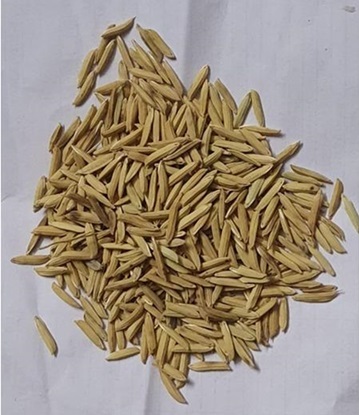
    The ASR Paddy from Chauhan’s Farm
    Krishaks Need Krishikas : For Naturalization of Agriculture

    Krishaks Need Krishikas : For Naturalization of Agriculture

    Krishaks [Sanskrit version of farmers] need Krishikas [the female companion of farmers] for the modern resource guzzling, toxic ridden farming sector to follow the path of naturalization that would ensure economically bright farm families and food and nutritional security of the masses. The deepening of agrarian crisis is real for India and quite widespread – spatially and temporally. While there is growing concerns about enhancing food production for the ever growing population, there are worries about declining productivity. The growing agri-based industry, tug of war for the land and food processing and declining returns in farm sector is looming large over this primary segment. The soil health crisis [average organic content 0.05% in India], about half the area still unirrigated and nutritional crisis due to chemichalization of agriculture in India is not hidden anymore. The farmers at the fulcrum suffer the most. They need support from every end that makes their business easier and profitable which is the most important thing to keep them motivated. There have been umpteen models suggested by the academics, policy makers and opinion architects that is mostly indicative of a regime that makes the farming profitable for all the players, specifically the farmers. In the buzz of the recent decade the eager ears could hear the nature’s message loud and clear – “come to me and I shall show the path”. We at the FORCE heard that and decided to promote naturalization of agriculture. Over the past decade we have been engaged in promoting water efficient farming in states like Punjab, Uttar Pradesh and Haryana. Over 500 farmers have been following water efficient farming through broad bed method where about 40-60% water can be saved as the irrigations are guided through channels [whole filed is not irrigated] and anaerobic rice system that promises 70-90% saving of irrigation water which follows direct seeding on compressed soil [and no nursery raising]

    The realization of chemical burden and toxicity in food came to the fore on this journey and we thought of localized intervention for this. Farming needs seed treatment, growth chemicals, fertilizers and pesticides. They have helped us achieving food self-sufficiency with a fallout of environment and health impact. Without an effective and economical alternative, these synthetic chemicals would keep on hovering us.

    The alternatives to these are bio inputs like Beejamrit for seeds, Jeevamrit for as fertilizer and soil conditioner, leaf decoctions as bio-pest and disease control, vermi compost as multi-nutrient fertilizer etc. these can be made at the local level itself, with ease and at home. Who can do it better that the village women. We initiated that movement in Hathras and Mathura where we are working with over 300 farmers. We named them Krishikas, the female companions of Krishaks –the farmers.

    About 40 Krishikas across 10 villages have been identified. In Mathura about 10 Krishikas have been engaged in making vermi compost and have sold over 500 kgs of nutrient rich compost apart from applying them to their own local farms. They have also trained several women enthusiast in Greater Noida, Mathura and Hathras. In Hathras 30 Krishikas are ready to bring about a silent revolution in agriculture. These women belong to 8 villages and have already been trained in vermi compost making. Shortly they will also be undergoing training on other bio-inputs manufacture. The idea is to make the bio-inputs readily available at the farm level itself which is one of the major components of transformation towards naturalization of agriculture. Then there are spillover benefits:

    1. Women entrepreneurship and leadership at the grassroots
    2. Nutrition from farm to plate
    3. Resource conservation and improvement in soil health
    4. Ecosystem benefits
    5. Favoring economics for the farmers

    FORCE is implementing this model of Krishak-Krishika across north India and is confident of making naturalization of agriculture a reality. References:

    1. https://www.ijfans.org/uploads/paper/6e1187ce5433cb712a3e47c1874f3677.pdf
    2. https://www.extensionjournal.com/article/view/481/7-3-123
    3. http://www.igidr.ac.in/pdf/publication/WP-2019-017.pdf
    4. https://www.deccanherald.com/opinion/soil-health-crisis-urgent-reforms-needed-for-sustainable-agriculture-1234300.html
    5. https://www.indiatvnews.com/news/india/in-india-6-000-tonnes-of-pesticides-are-used-to-save-108-million-tonnes-of-vegetables-7063.html
    Self Reliance Through Vermi Composting

    Self Reliance Through Vermi Composting

    An Inspirational Journey of Babita: Self-reliance Through Vermi-Composting

    Backdrop

    Babita is an ordinary lady of Lalpur village whose life until recent was crippled with household responsibility and socio-economic challenges. A near total dependency on farming activities made it difficult for Babit to balance the daily expenses while the income came only periodically. This situation many a times made Babita think if she would see the light someday and fulfil her and family’s dream.

    Now this is the story of almost every women in that village who persistently reel under the economic backwardness and social boundaries.

    The Wind of Change

    The life gives opportunities time to time but it’s in our hands to grab that chance and improve our life. In 2024 Babita came in contact with FORCE when it was working on Water and WASH project in Nandgaon Block of Mathura funded by PepsiCo India. FORCE was trying to find a win-win situation for the women through self-help groups engaging them to activities that can make them self-reliant though activities that would fit into the broader theme of WASH.

    This was when FORCE organized a training programme on vermi-compost; of about 50 women Babita was one. The training immediately struck Babita’s mind as she already thought of the four buffaloes at her home and a huge amount of dung produced through them on a daily basis.

    The training changed the direction of her life.

    Training Made Her Self-Confident 

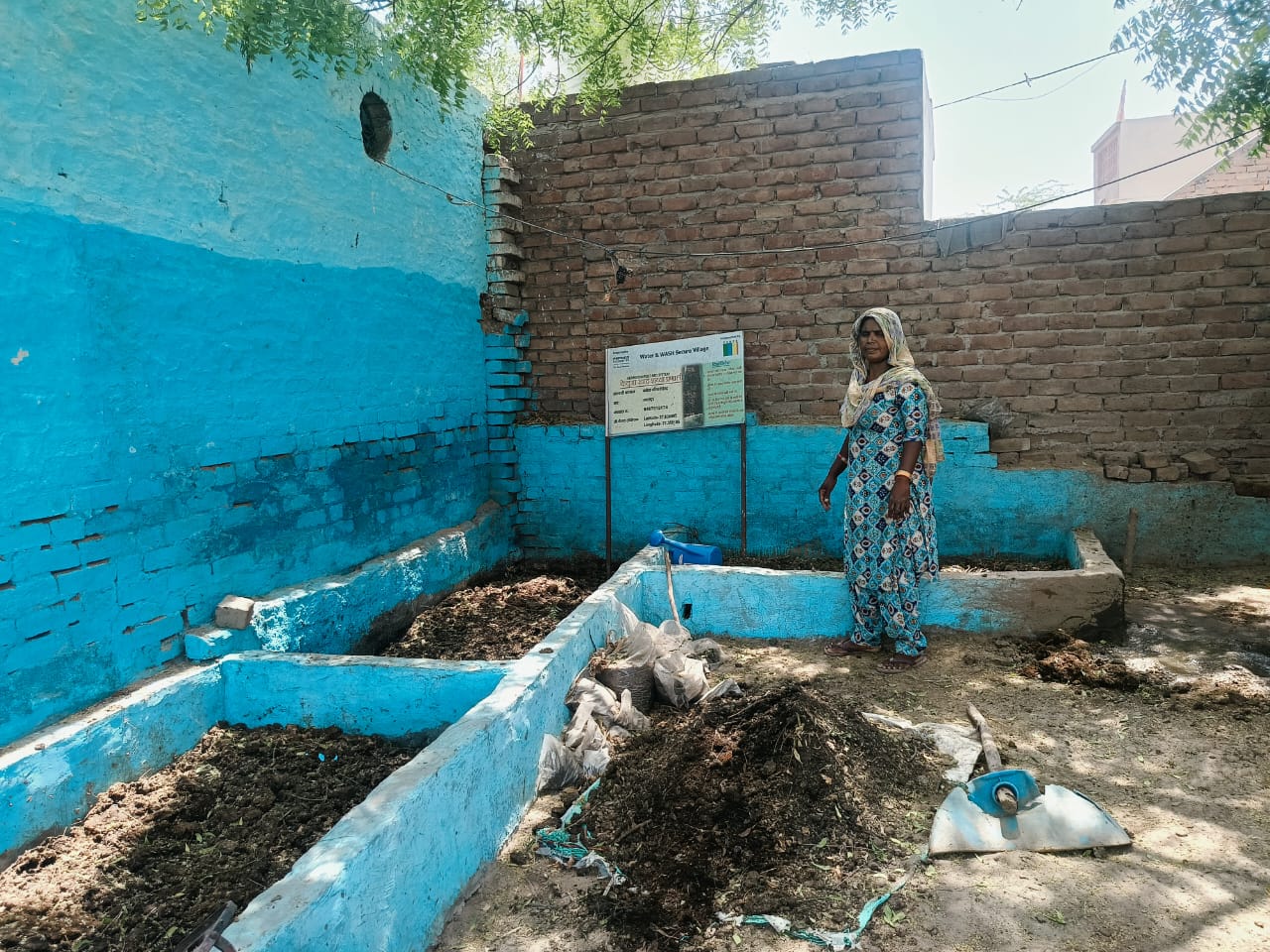
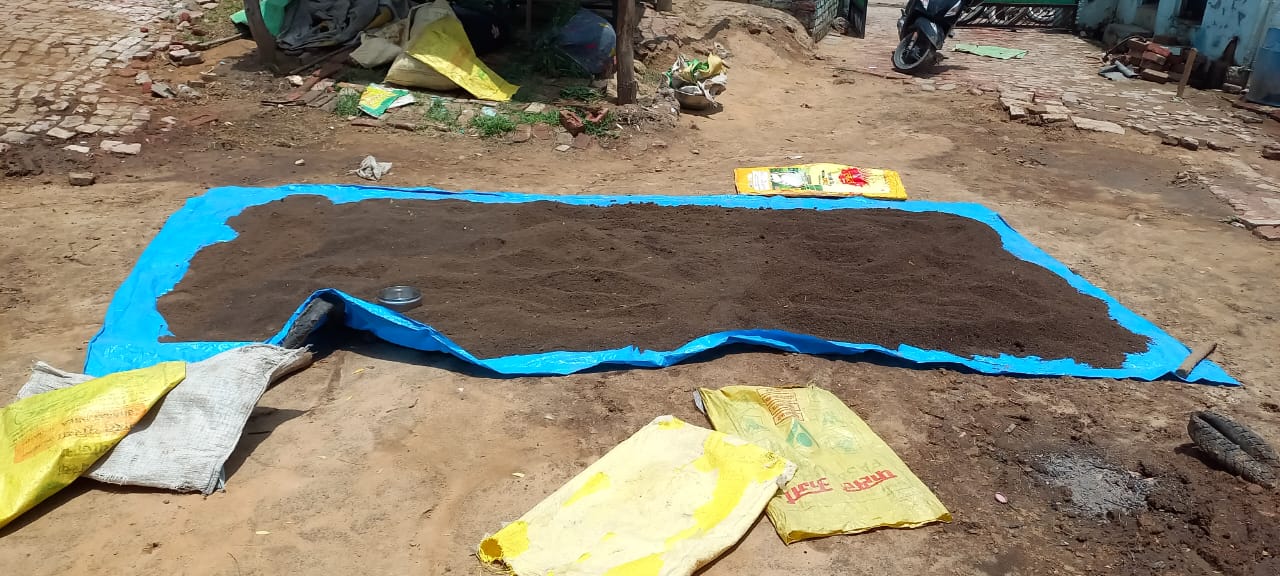
    vermi compostingFORCE designed this training on vermi-composting that serves two purpose – one to make the women in village self-reliant through house-based activities and two – the compost would be sold to the farmers and slowly build a base for bio-input revolution in farming that would make our food nutritious and poison free by slowly replacing chemical inputs. In the long run it will improve soil fertility and ecosystem.

    Since then Babita along with her friends have attended two more trainings. Over hundred such women have already taken training on compost making.

    Babita has taken this business seriously and has invested her spare time to convert waste to wealth. The initial stages were tough as there were resistance from family but eventually they became supportive to her new venture.

    Today’s Babita

    A Successful Entrepreneur:

    • She has four vermi compost units that is able to produce 5 kg vermi compost on a daily basis
    • Local farmers purchase this compost from her
    • She is able to generate a revenue of 5-8 thousand every month – and increasing
    • Now she is also able to sell earth worms @200 per kg

    A trainer herself:  

    • Babita is now a trainer for the other women; she has already provided two trainings – one for women at Greater NOIDA and one for women of Hathras. Altogether about 60 women attended these training.

     Social Impact

    • Women nearby take her as source of inspiration
    • The agriculture nearby is slowly turning towards bio-farming
    • FORCE is assisting in increasing the compost demand in urban pockets
    • Enhanced economic awareness, confidence and self-reliance among women

    In Her Own Words

    • “I used to think women are made to do only household work and support family but after getting in touch with PepsiCo & FORCE has changed my thinking. I know for sure women can achieve anything – only that the poor rural women need some initial push and support”

    Pin It on Pinterest